
TactileMat – High-Resolution Pressure Sensing Mat
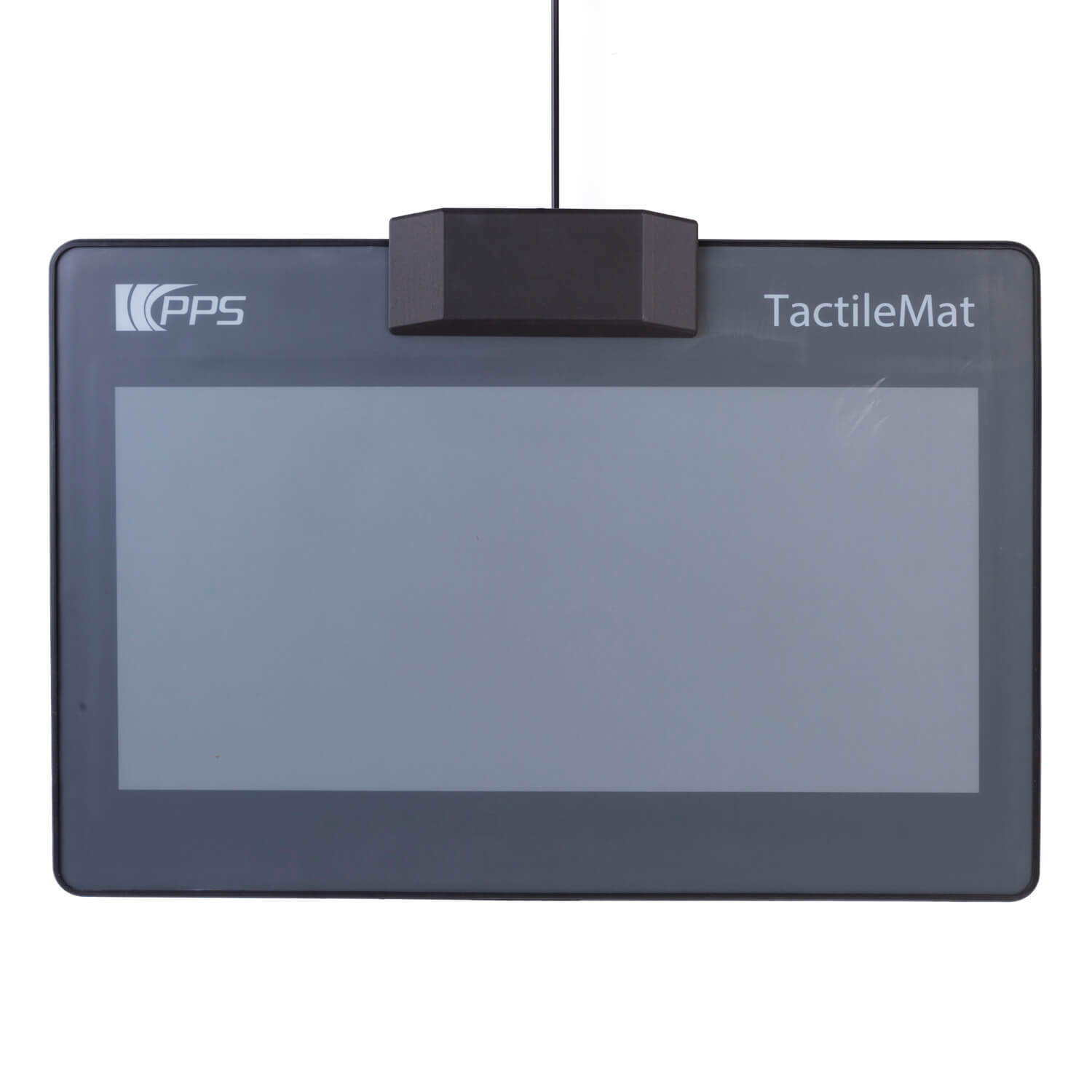
TactileMat is a rigid, robust pressure sensing mat with a 220 mm x 450 mm active sensing area, making it one of the largest high-resolution pressure mapping sensors on the market. Because the sensing area is continuous, TactileMat captures pressure distribution across its full footprint in a single pass, avoiding the dead zones that occur when multiple smaller sensors are placed side-by-side. This makes it suitable for both industrial settings, such as product design and quality testing, and clinical settings, such as gait and balance assessment.
Key Features
High spatial resolution (5.0 x 5.0 mm)
Heavy-duty, rigid construction with non-slip base
Slim profile, just 7.7 mm thick
Operates between 5°C and 80°C (static environment)
Captures pressures from 3 up to 40 psi, with custom ranges available
Waterproof IP53+ (can be special ordered to higher waterproofing upon request)
Active sensing area of 220 mm x 450 mm (44 x 90 matrix array)

Product Description
TactileMat is built on PPS's Industrial TactArray (ITA) sensing technology, giving it the durability and accuracy needed to capture pressure distribution across a large, single active area rather than stitching together readings from multiple smaller sensors. Its 44 x 90 matrix array of 5.0 x 5.0 mm sensing elements provides consistent, high-resolution coverage across the full 220 mm x 450 mm active area, while the rigid, non-slip construction keeps the mat stable during testing.
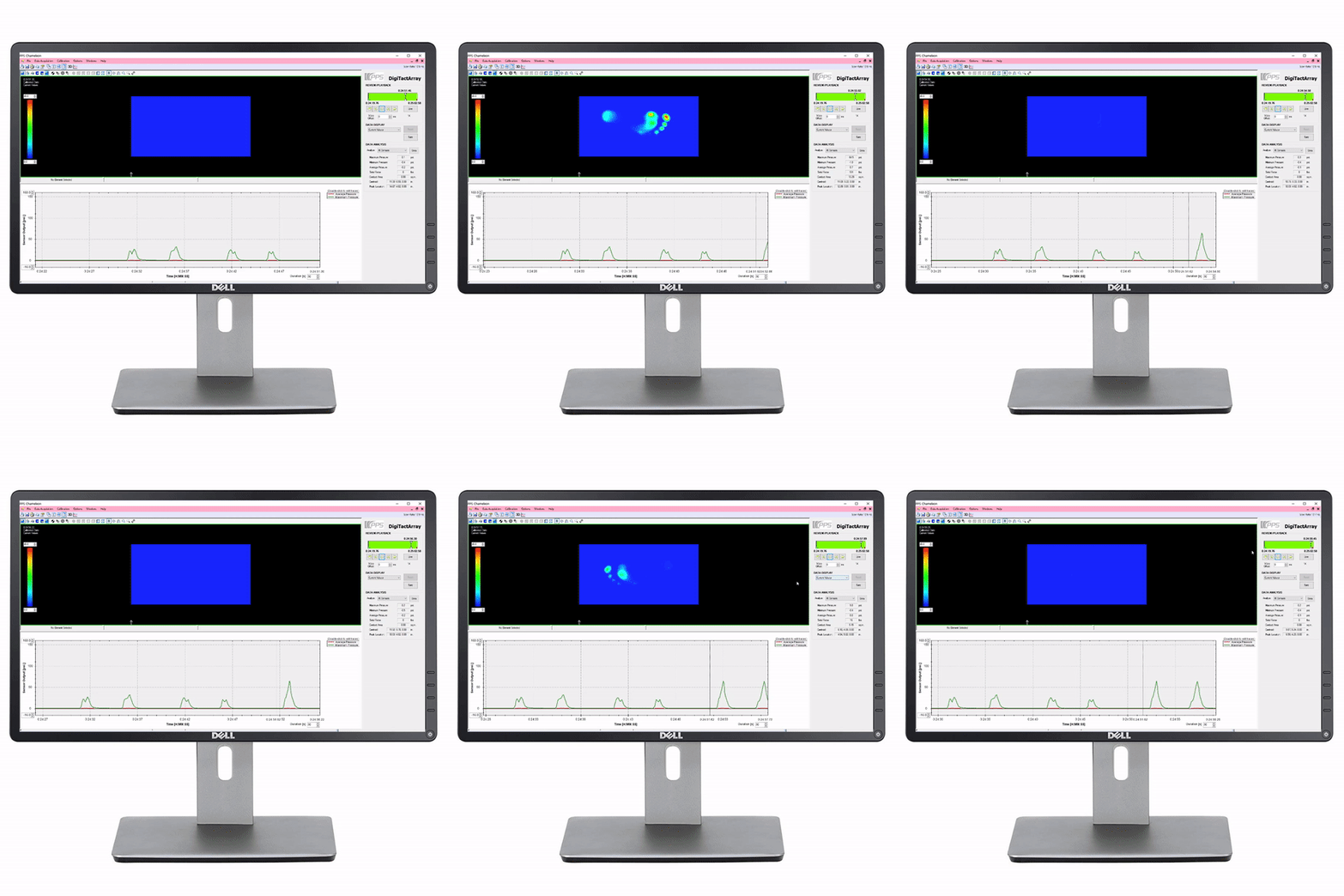
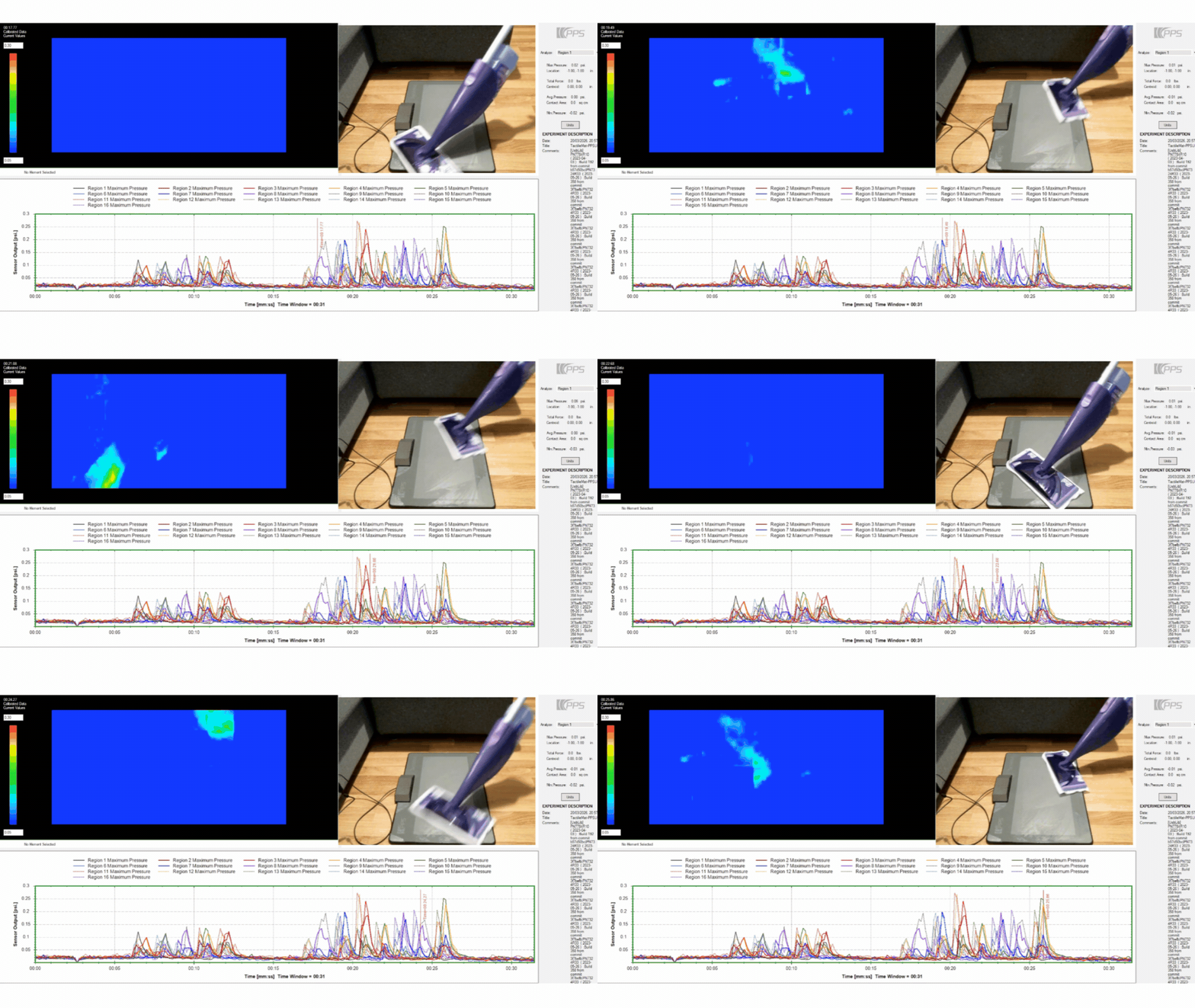
Data from TactileMat is captured via Chameleon Software, which provides both numerical readings and visual representations of pressure distribution, and can record and play back synchronized video alongside the pressure data. This makes it straightforward to fit TactileMat into an existing production line quality check, research data collection setup, or clinical assessment process, rather than requiring a dedicated test solution.
Applications
What makes TactileMat distinctive isn't its size alone. It's that one sensor performs equally well on an industrial production line and in a clinical research lab, with no change in form factor.
That versatility carries through to how it fits into existing setups. TactileMat connects via USB and runs on Chameleon software, which can record and play back synchronized video alongside pressure data, slotting into a production line's quality check, a lab's data collection setup, or a clinic's assessment process, rather than requiring a dedicated test solution.
It also extends to pressure range. An industrial load test and a gait trial put very different forces through the sensor, so matching that range to the application is what keeps the data meaningful.
Industrial & Product Testing:
Measures contact pressure of mop heads, vacuum heads, and curling brushes across a wide range of floor surface equipment
Captures load distribution across packaged or stacked goods in transit
Maps how an object or hand interacts with a surface for product design and ergonomic testing
Tests pressure distribution across mat-style consumer products, including mouse mats, standing mats, and ergonomic floor products
Verifies pressure distribution across an industrial spray pattern for consistency
Clinical & Research:
Assists balance assessments by capturing how a person's weight shifts and interacts with the surface beneath them
Supports veterinary and animal gait studies through dynamic, low-pressure load capture
Measures pressure distribution across the foot for footwear, orthotic, and gait analysis research
Captures a patient's foot pressure profile during walking, supporting custom insole and orthotic design
TactileMAT System Specifications
| Array Configuration | 44 x 90 matrix array (5.0 x 5.0 mm elements) |
| Active Sensing Area | 220 mm x 450 mm |
| Full Scale Range | 3, 5, 7, 20, 40 psi (custom ranges available) |
| Thickness | 7.7 mm (0.303 in) |
| Signal-to-Noise (SNR) | ≥ 300:1 |
| Sensitivity | ≤ 0.2% |
| Linearity | 99.8% |
| Gain Non-Repeatability | ≤ 3% |
| Accuracy | ≤ 2% |
| Sampling Rate | 16.7 Hz, relevant to pressure |
| Interconnect | USB 2.0 |
| ADC Resolution | 12 bit |
| Input Voltage / Power | 5 V / 2 W |
| Operating Temperature | 5°C to 80°C (static) |
| Cable Length | 1.5 m (3 m optional) |
| Waterproofing | IP53+ |
Proven Experience
PPS has over two decades of experience designing and engineering large-area tactile sensing systems for demanding real-world applications. That experience ranges from custom research projects, such as pressure mapping for Red Bull's Surf Science program, to integrated commercial sensing solutions like the tactile sensor at the heart of the eSoles 3D TruCapture Kiosk.
“PPS’s design, engineering, and orchestration of other high-tech partners to develop and realize this breakthrough multi-dimensional system is nothing short of remarkable”
TactileMat builds on this proven sensing technology, bringing the same accuracy and reliability to a wide range of industrial, research, and clinical applications.
Frequently Asked Questions
Is TactileMat waterproof?
TactileMat carries an IP53+ rating as standard, with higher waterproofing available as a special order for applications such as wet floor mopping or outdoor use.
What pressure ranges does TactileMat support?
TactileMat is available in 3, 5, 7, 20, and 40 psi full scale ranges, with custom pressure ranges available on request to suit lighter clinical loads or heavier industrial applications.
Can TactileMat be used somewhere other than the floor?
Yes. While TactileMat is commonly placed on the floor, its flat, rigid design suits a wide range of setups, from benchtop and fixture-mounted industrial testing to research lab environments, without any change in form factor.
Can TactileMat data be synchronized with video?
Yes. All PPS sensor systems, including TactileMat, can be used with a camera and synchronized in Chameleon software alongside pressure data, making it straightforward to review test footage and pressure readings together.
Does TactileMat measure pressure or force?
TactileMat captures calibrated pressure data, and Chameleon software allows the unit of measurement to be changed in the Analysis view, with presets available for the most commonly used pressure and force units.
How often does TactileMat need calibration?
The capacitive-based sensing in TactileMat results in an extremely stable sensor with excellent reliability and repeatability. With proper use and care, TactileMat should retain its calibration without needing to be recalibrated.